



Healio: ‘Blended Intelligence’—Combining Human Wisdom, AI Poised to Transform Clinical Care
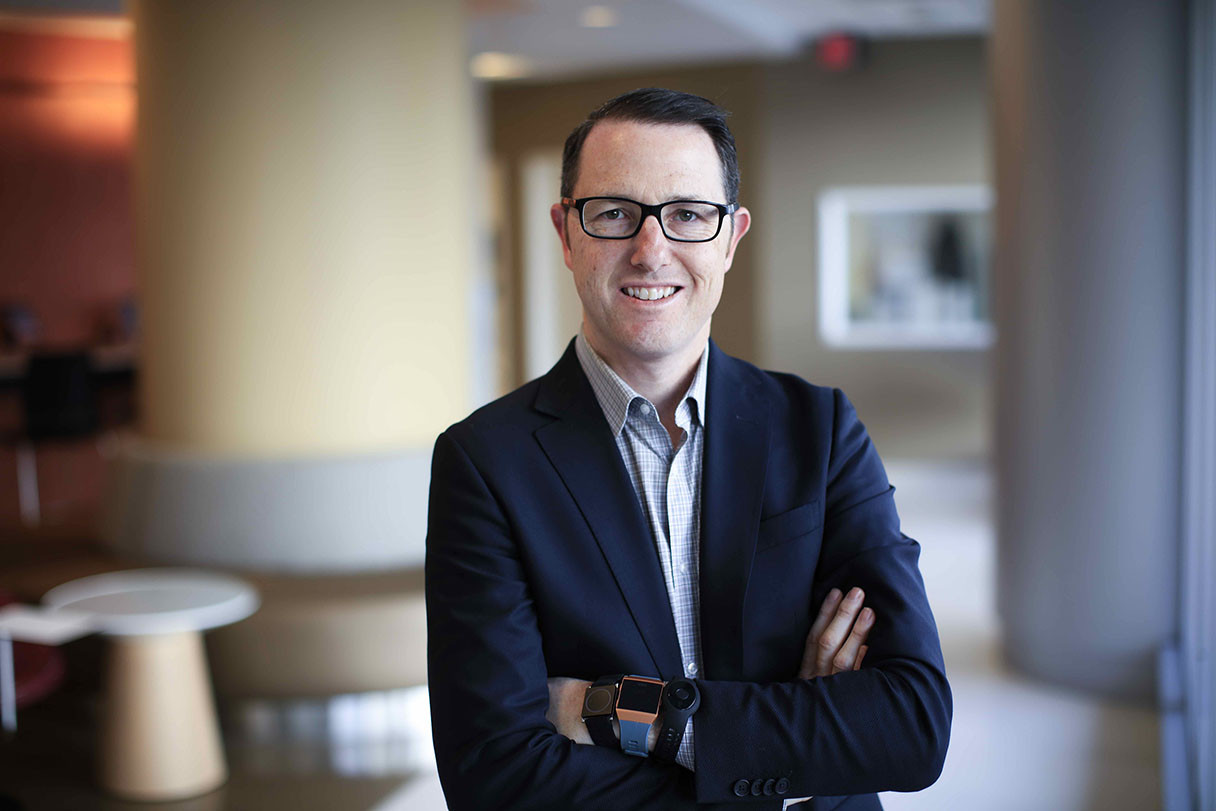
Healio recently interviewed Brennan Spiegel, MD, MSHS, director of Health Services Research at Cedars-Sinai, about the use of AI to enhance—not replace—compassionate, humanistic care provided by physicians.
Spiegel, who directs the Center for Virtual Medicine and Health System Transformation at Cedars-Sinai, was the keynote speaker at the medical center’s recent Virtual Medical Conference.
Spiegel told Healio he introduced the term “blended intelligence” to describe clinicians’ use of AI as a supportive tool while maintaining their own central, human role in patient care.
“Neither tries to be the other,” he said. “They augment each other.”
Spiegel told Healio that while computers excel at processing data, information and knowledge, “Wisdom is what distinguishes not just doctors but humans in general from computer systems.”
He cited an example from Cedars-Sinai, in which clinicians use smart glasses with AI-linked access to health records, allowing them to maintain eye contact with patients while seamlessly retrieving needed information.
“The computer is looking for patterns in the chart that humans might miss, while the human is engaging with the patient, making eye contact, communicating and being part of shared decision-making,” he said.
Spiegel also shared how Cedars-Sinai researchers are using an AI-enabled virtual reality system that simulates symptoms of irritable bowel syndrome—such as discomfort and bloating—so doctors can physically experience what patients feel.
"This is an example of where we can use technologies to enhance understanding of the human biopsychosocial experience of having an illness," he told Healio.
Spiegel said AI frees clinicians to focus on core patient care—exams, communication and decision-making—while handling administrative tasks.
“AI is not going to replace doctors, but doctors who use AI will replace doctors who don’t,” he said.
Read the complete article from Healio.